

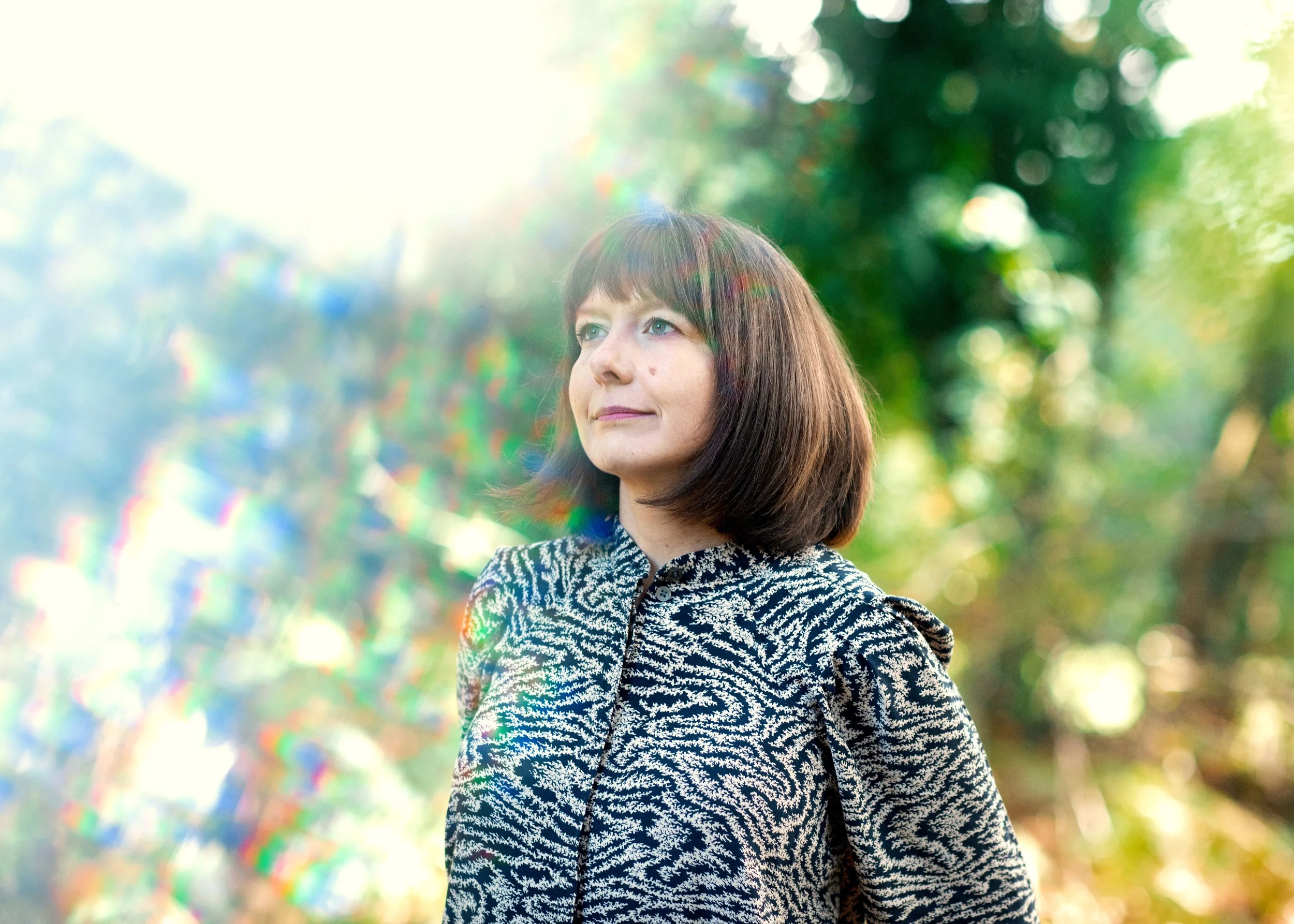
Photo credit: Camilla Greenwell.
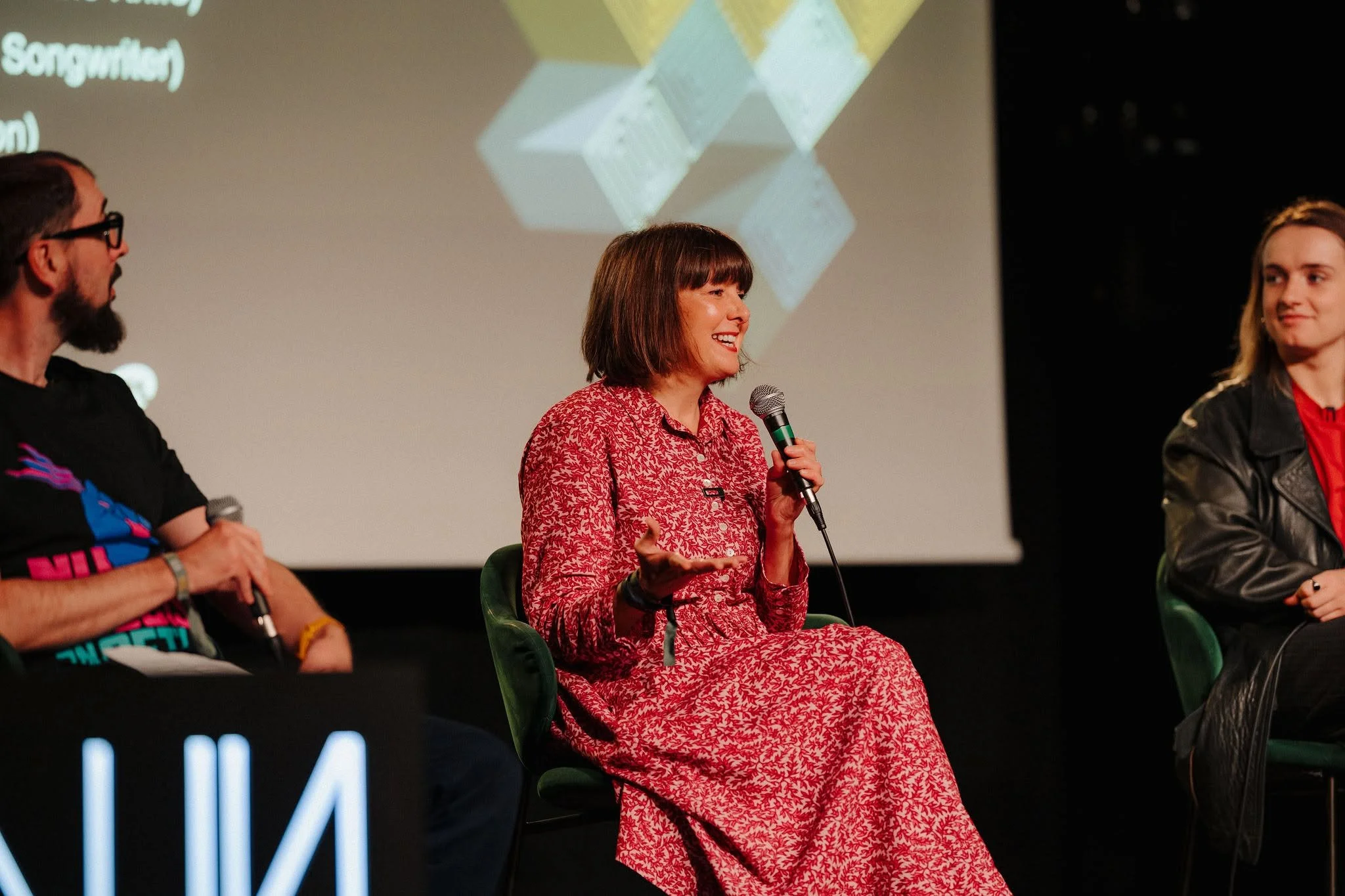
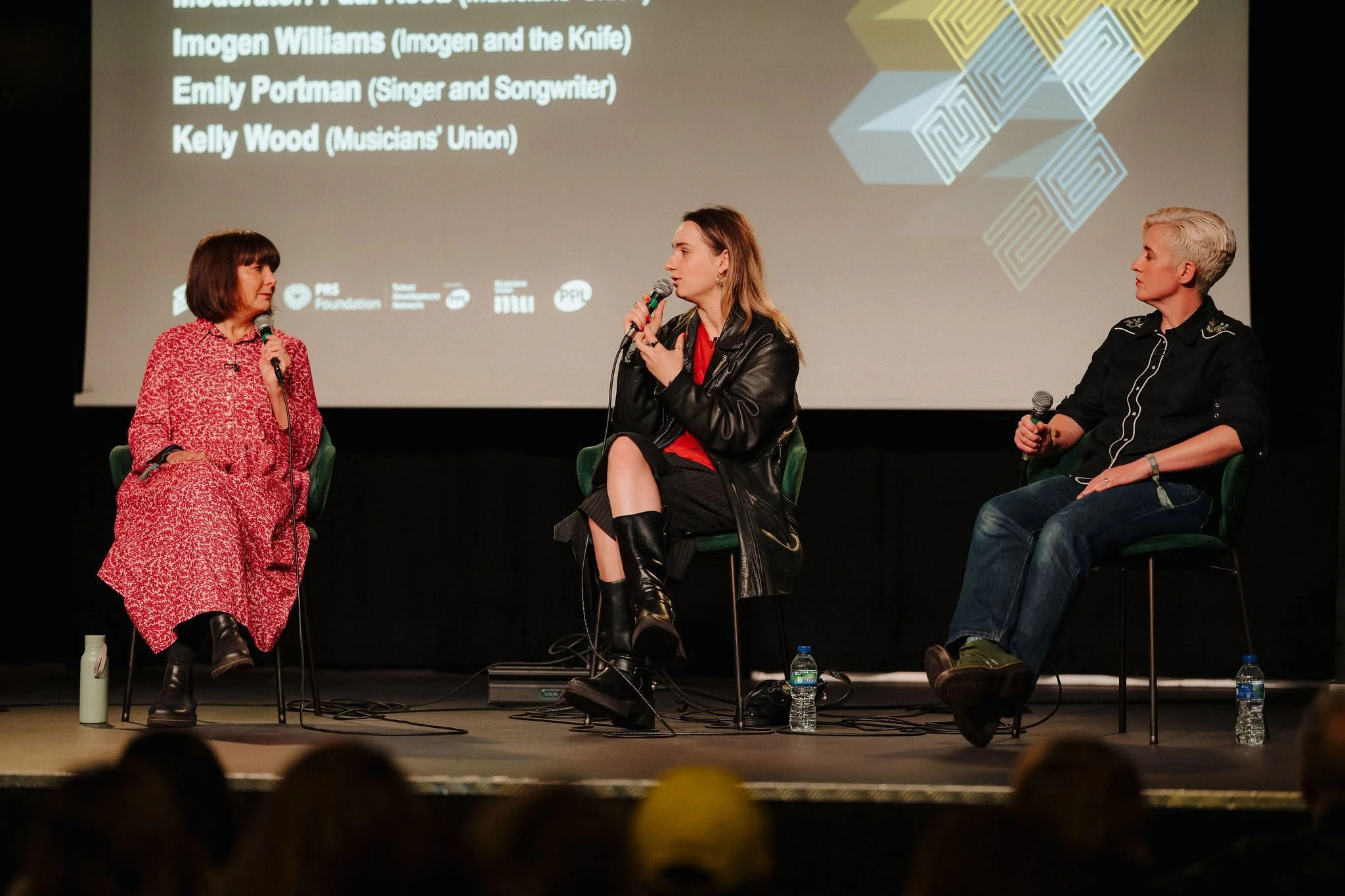
Sound Roots caught up with singer and songwriter Emily Portman at last month’s Unconvention music conference in Manchester, shortly after she appeared on a panel discussing the UK Artist Touring Fund (UKAT), which aims to tackle the growing financial pressures facing artists on the road.
A recent and proud recipient of the fund, Portman had plenty to say about the challenges of making a living as a touring musician. But our conversation took us beyond the economics of life on the road, touching on her new album, Dominion of Spells, a record steeped in folkloric transformation, midlife and magic, as well as the bizarre case of a fraudulent AI-generated album released under her name last year. We also talked about staying resilient, finding inspiration and navigating an increasingly unpredictable musical landscape.
Sound Roots: Hi Emily, so you recently dropped into the Houses of Parliament to discuss your experiences of AI fraud. Please could you tell us more about this?
Emily Portman: So, I recently spoke about my experiences of AI fraud, alongside a visual artist. He discussed his watercolours being copied and sold on various bogus AI sites. It was interesting hearing about a similar thing happening to another artist in a slightly different field. I also learnt from other experts in the field who were able to fill in some shocking details about how much AI is flooding streaming platforms. They shared some figures about how half of all music now uploaded to Deezer is AI.
The feedback that I got was that it was a positive thing to hear real-world case studies like mine. The politicians are there crunching the numbers and considering the wider implications, but having a detailed look at somebody’s own experience of AI fraud helps them put it into context.
SR: You’ve found yourself talking about AI a lot recently since the fake AI Orca album was released last year in your name. How have you found being a spokesperson for this kind of thing and is there any advice you would share with artists about remaining resilient in these times?
I loved that you said it redoubled your passion for performing and collaborating with other people.
EP: I feel like the folk scene in particular, being a grassroots community, supports artists who are doing their own independent music in whatever way they can. Folk music has always been interlinked with building and sustaining community. So, the support that I’ve felt from the community has been really significant. Audience members have come up to me after gigs and they’ve said, “We know that real musicians and listening to live music are what it’s all about. We can’t believe people are listening to AI artists.” It’s so alien to a lot of audience members who love this type of music. AI music is the opposite end of the spectrum!
Perhaps that doesn’t exactly answer your question, but it maybe goes some way to explain my stance on it. It’s really led me back to why I do this music in the first place. That’s what resilience is about for me – that reconnection with why I do it in the first place. I do it to connect with other people and to hopefully move or uplift them. If they go away from a gig feeling like they’ve taken something from one of the songs and the stories behind the songs and they come and tell me about it, that’s what it’s all about for me, that sense of community and connection.
I hope very much that people will always recognise the value of that connection and real musicianship over AI music. I have maybe a bit of an idealistic belief that hopefully there will be more of a bounce-back from audiences as well as artists, saying that we don’t want this because we recognise we are robbing real artists when we are listening to this music. I’m seeing this bounce back already happening, but I’m really hoping that it will grow and people will show their support for real artists in whatever way they can. Coming to our shows, buying our merch; these are ways audiences make a huge difference to us.
SR: Did you receive a lot of varied responses from people when you recently called out to other artists that have been affected?
EP: Yes. In fact, one artist who reached out had her voice scraped for use on an AI music generation platform. It even used her name. A user could go on and select her voice for whatever you wanted her to sing. She really had to fight to get it taken down.
It’s shocking that there are so many ways that we are having to fight to keep our voices and our identity and music from going into that AI machine and being spat out in all these ways we never asked for. It shows a lack of respect for artists on multiple levels. Also, from a user perspective, I don’t feel there’s enough awareness of what it means when you feed someone’s music into a music generation piece of software. It’s seen as a bit of fun, but as an artist, you’ve lost control of your material when that happens, and copyright law hasn't caught up with AI yet.
The album was released in my name and trained on my music. I wasn’t the author of Orca, but who was? If you press a button to generate music based on another artist, are you really the “author”? Since it was trained on my back catalogue, you could argue I should have been recognised – though I’m not sure I’d want to be, mind! I would at least want some control over its existence and distribution in the first place.
SR: The American Federation of Musicians (AFM) today were arguing artists should receive some sort of commission or money off the back of it, just even as a starting point.
EP: Yes, exactly, though unfortunately, that ship has already sailed for too many artists. But it's not too late to bring in regulations and new laws, so that if an artist was happy for their music to be used in training AI, they would at least receive some remuneration for it.
SR: As an independent artist you wear so many hats and there’s all these new issues to contend with. It must be difficult not to get overwhelmed. Your recent album is so nuanced and deeply informed by mythology, folklore and your experience of motherhood. How do you ensure you don’t get disenchanted and hold onto the meaningful moments?
EP: That’s a really good question. I think it would be easy for me to look at the album, which has done fine and then look at the AI album and think, well, which one got more coverage, because the AI album made national news. Ultimately though, I just went on tour with the new record and the beautiful feedback that I got from the audience members was enough for me.
I think we are seeing ourselves in quite a different, maybe a little more hostile, landscape these days, in terms of making money from our music since streaming has taken over. As an artist who started almost 20 years ago, I sometimes look back at how charmed the music industry seemed at the beginning: you charged your tenner for your album, everyone bought physical and the music press was so much bigger. I was lucky enough to get reviews in all the papers and did well. As an independent artist releasing on my own label, with no PR behind me and no social media, my first album sustained me and gave me enough money to make my next record. We've come some distance from that. I think our music is worth less because it's streamed and everybody gets it basically for free if they’re subscribers to a streaming platform. It’s the streaming platforms that take most of the profit.
So, in light of that it's been important to me to go back to why I do it! There was a guy who came up to me at a gig and he said, “I’ve never cried at a gig before, but your song, Turn Again, moved me so much.” He told me about how it really resonated with him in relation to his own child. That was one of those moments that reminded me why I continue to do this job.
SR: Yes, a lot of these other topics can be a distraction, but then as soon as you are back writing, collaborating and having those interactions, it reminds you of the importance of all of it.
EP: Exactly and I came back from tour feeling really positive. I'd been a little bit nervous and ground down by all of the expectations to be your own social media machine. It's a big change and shift of pressures on musicians, which ultimately leaves us with less time to practice or compose. But coming back from this tour just totally filled up my cup.
SR: Do you have any more advice for musicians navigating this landscape? You spoke about diversifying your merch offering and actively applying for funding, although it may seem daunting.
EP: It’s not like I've got all the answers at all! I would say knowing the importance of having a mailing list, speaking from bitter experience after letting my own list languish and then having it disappear when they did an update, so I’ve had to start again.
Also, with being a musician, it's thinking about it from a sustainability point of view. There are loads of expectations on musicians, but it's about keeping an eye on what fills your cup and making time for that in your day, because getting back to the music is the really important thing. So, yes, apply for that funding, sort out your mailing list and get yourself out there on social media, but you don't have to always be giving everything away. This is advice for myself as well because I don't do this enough: allow yourself time to practise, to play, to develop your art. Keeping that as your cornerstone and protecting that time for creativity, in amongst all these demands to be everything to everyone, is so important.
That’s what I am trying to work on myself right now. You could spend your whole day on admin, advertising your gigs and tending to your social media. It can end up feeling quite soulless if you don't actually do the thing that you love. It’s also about refocusing your attention as an artist on what actually sustains you by surrounding yourself with other forms of art and music as well.
SR: I liked what you said about creating an album nowadays being a radical act.
EP: It does feel like that in the age of streaming and short attention spans! Today’s grassroots artists have my greatest respect, particularly those who persist in making less commercial music that doesn’t neatly fit into a box!
Thinking of artists just starting out, I remember when I made my first album. I’d been on the folk scene singing traditional songs, and then I made my first record of self-penned songs. I was a little bit worried: “How will it be categorised? Am I going to get the same audiences?”
The truth is that my audiences did change over time and there were folk clubs that shut their doors to me at that point, but my advice would be not to worry too much about where you might fit. It’s not necessarily your job, as an artist, to decide which pigeonhole you belong in.
It’s about not limiting yourself. That worry can hold you back from making the album you want to make, because you decide, “Oh no, I don’t know if my audience would like to hear these songs.” If that’s stopping you from doing something creative and different, don’t let it. It’s really good to follow your curiosity without being weighed down by concerns about whether it will sell.
It’s hard, because a lot of people may feel they don’t have the luxury of thinking like that, but I feel that second-guessing whether people are going to like it or buy it can be such a killer of creativity.
With The Furrow Collective, we’re not a polished auto-tuned band at all, but actually I think people appreciate something about the organic nature of what we’re doing. The realness of it, the storytelling, the fact that it’s not overly polished and smoothed down into oblivion: I think there’s an audience for that too, especially in the age of A.I!
SR: What do you attribute the band’s longevity to?
We all have a deep love of traditional songs and that's why we set up The Furrow Collective. We wanted an outlet for story songs and folk songs, particularly from England and Scotland, though we branch out much wider than that. The band is changing at the moment; Rachel has just stepped back, so we’re evolving in different ways for different reasons. But after over a decade of playing together, it’s always felt easy: we get together and enjoy it. Things come together intuitively and there’s so much unspoken in a rehearsal. You just slot in with your harmony. That’s a kind of magic that comes from really knowing your collaborators.
SR: And when you find those people, you want to hold onto that.
EP: Exactly. Lucy and I have different voices, but sometimes when we listen to the record, I can’t tell who’s singing the harmony. Over time you meld the sound together, adapting your singing in small ways to fit with others. We all get the chance to do that as we lead different songs. We organically change with our collaborators as musicians; they challenge me and encourage me to expand in different ways.
SR: As an artist you crowdfunded for this album, do you feel having that ability to be flexible and adapt is what it’s all about?
EP: Absolutely. I did a very long funding application for Dominion of Spells and I was unsuccessful. It was gutting, but moving on to the crowdfunding model was a really heartening process. It reminded me of people-power, and that grassroots support can be there even for an artist like me who hadn’t released new solo music in a decade. It was wonderful to have that support.
Having previously self-released my albums, I worked with Hudson Records on this one, a small indie label, but they weren’t able to front all the costs, so without the crowdfunder I would have remained stuck. Making an album is such an expense these days, even if you are in a privileged position of working with a label. It often takes a long while to recoup costs. As artists we hugely appreciate grassroots support, because we might not be able to make that album happen unless we get some kind of funding support.
Being adaptable and resilient means being able to bounce back from failed applications and go, “You know what, I still want to do this, let’s find a way.”
This is what I've been doing for 20 years and want to continue to do. It can feel pretty vulnerable to ask for help and to ask for funding, but it’s just worth saying that whatever stage of your career you are, it is not a failure to ask for support. We do need to adapt and develop resilience for sure in order to have that belief that enables us to say, “I still want to make that record.”
In terms of crowdfunding the album though, that’s the success of this brilliant grassroots community and scene, isn’t it? That there are such generous people willing to support it.
Find out more about Emily Portman at www.emilyportman.co.uk.
